How to Choose a Fishing Kayak: Start With Your Load
How to choose a fishing kayak in five steps: load and capacity, sit-on-top or sit-in, paddle or pedal, length for your water, and transport.

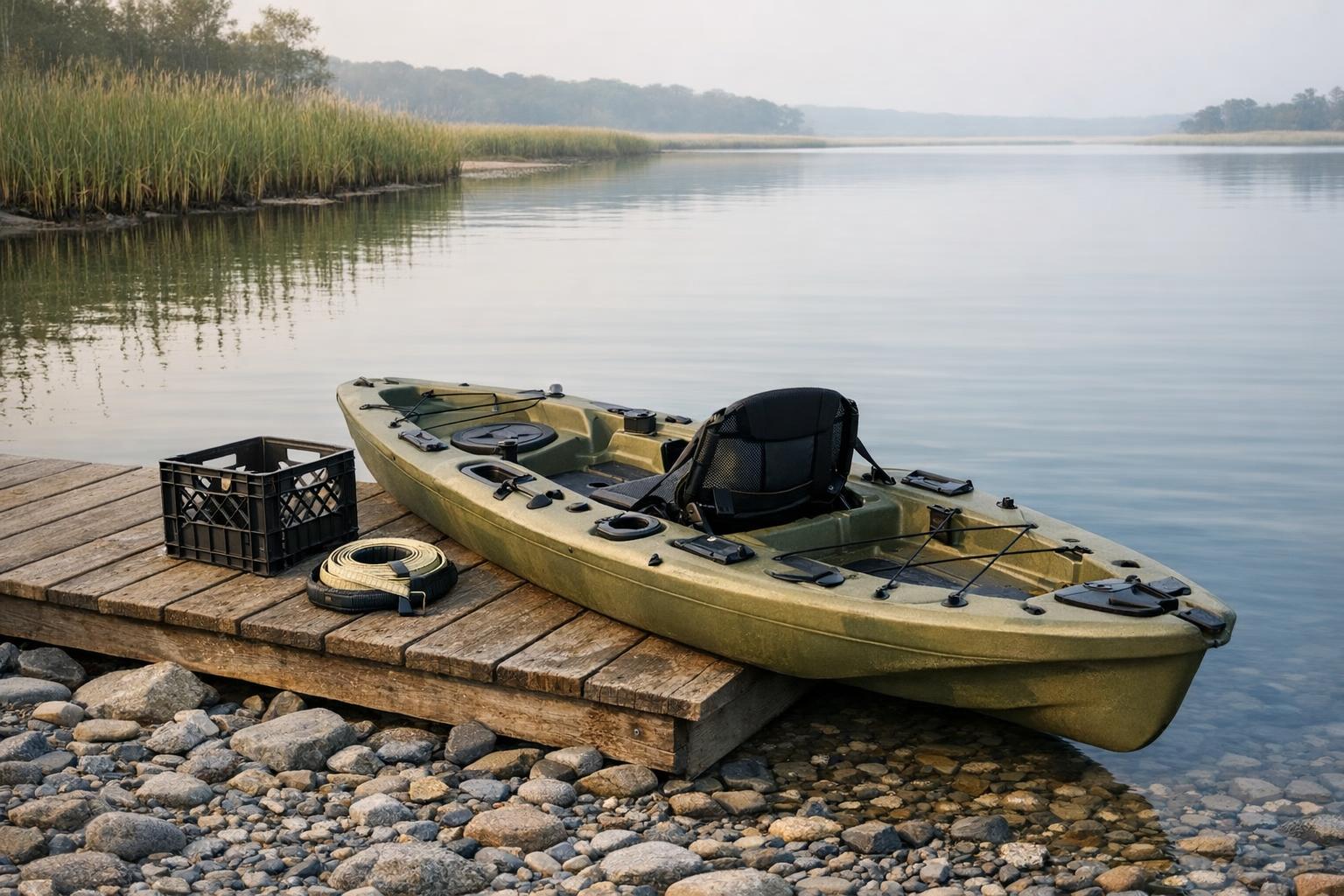
To choose a fishing kayak, start with the load: your weight plus your gear decides the capacity you need, and that narrows the field fast. Then pick the type (sit-on-top, sit-inside or inflatable), how it moves (paddle, pedal or motor), a length that fits your water and your car, and finally the rigging. Rod holders and tracks can be added later; too little capacity cannot.
Affiliate disclosureAs an Amazon Associate we earn from qualifying purchases made through links on this page. Commissions never change our ratings.
Step 1: the load and the capacity
Write down your weight and everything that goes aboard: tackle, crate, cooler, anchor, life jacket, fish finder and battery. REI's fishing kayak guide starts the same way: consider your own weight and the amount of gear you want to haul.
Then compare that total with the stated capacity, keeping a margin. Some makers print a lower usable figure; when they do, use it. The details are in fishing kayak weight capacity, and the kayak capacity planner does the arithmetic.
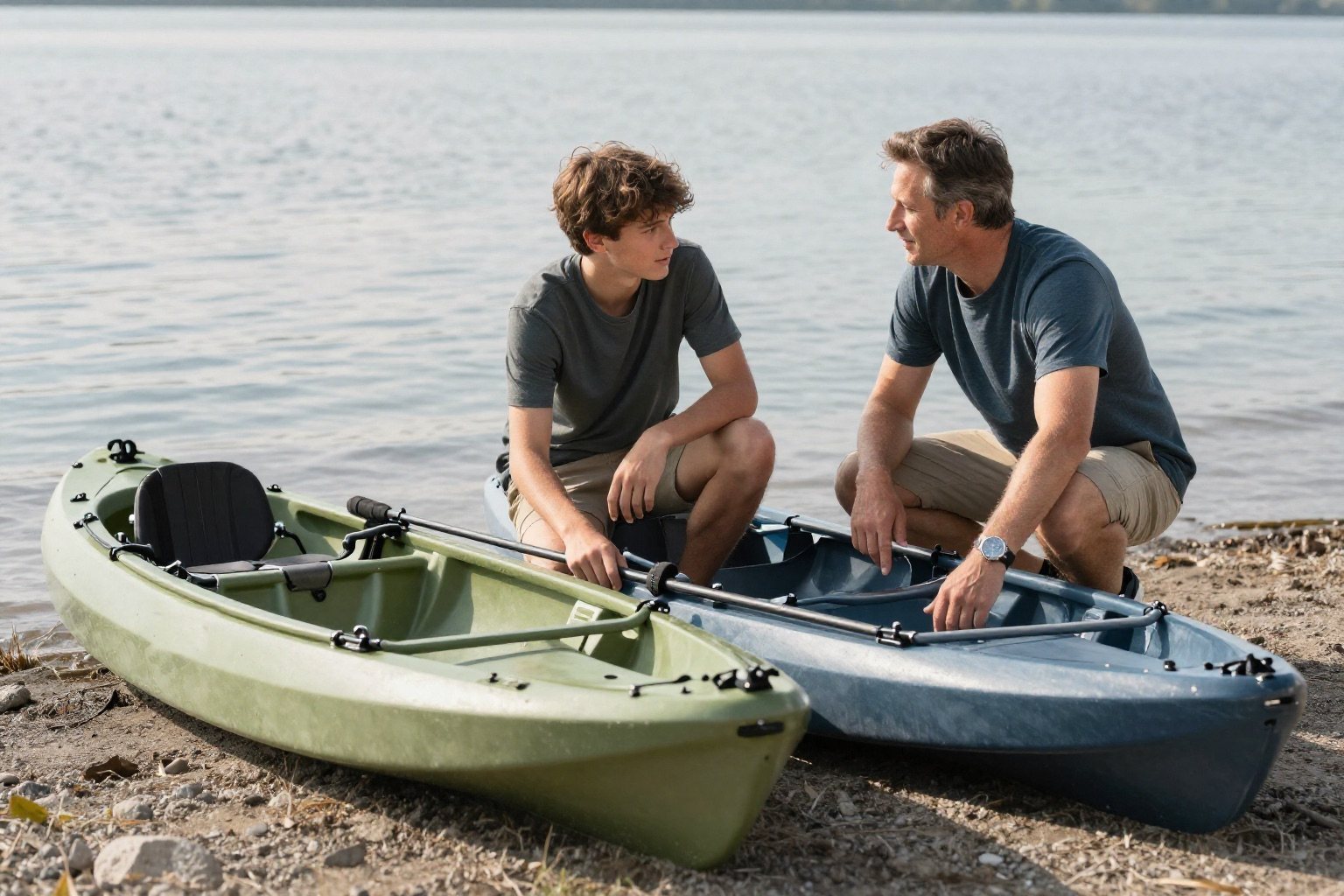
Step 2: sit-on-top, sit-inside or inflatable
| Type | Best for | Watch out for |
|---|---|---|
| Sit-on-top | Most fishing; easy on and off, often standable | You get wet; heavier |
| Sit-inside | Cold water and wind | Less room to move; cockpit fills if you capsize |
| Inflatable | Small storage, travel | Needs a good pump; may paddle slower |
The table follows REI's guide. Compare the two hard-shell types in sit-on-top vs sit-inside and the bag-sized option in inflatable fishing kayaks.
Step 3: paddle, pedal or motor
Paddling is simple, light and cheap. Pedals free your hands and help in wind and current, but REI notes they add cost and maintenance. A motor goes furthest, and adds a battery, weight and, in the U.S., state registration: the Coast Guard requires vessels with propulsion machinery to be numbered in the state of principal use.
More in pedal vs paddle and motorized fishing kayaks.
Where you fish decides the hull
| Water | What suits it | Our example |
|---|---|---|
| Small lakes and ponds | Shorter, stable sit-on-top; speed hardly matters | Pelican Sentinel 100X Angler |
| Rivers and streams | Shorter hull that turns well in tight spots | Lifetime Muskie Angler |
| Big lakes, long runs | Longer, narrower sit-on-top that tracks well | Perception Outlaw 11.5 |
| Coast and tidal water | A rudder helps with wind, waves and current | BKC RA220 Angler, 11.5 ft |
| Cold water, cool seasons | Sit-inside, plus clothing for the water temperature | Old Town Loon 106 Angler |
The left two columns follow REI's fishing kayak guide; the examples are kayaks from our ranking whose listings match the description (the BKC RA220 states a foot-operated rudder, the Loon 106 Angler a sit-inside cockpit).
Be honest about the water you will fish most often, not the trip you dream about once a year. A 9.5 ft kayak that you take out every weekend beats a 12 ft one that is too heavy to load after work.
Step 4: length for your water and your car
Shorter hulls (9 to 10.5 ft) turn quickly on rivers and ponds; longer ones (12 ft and up) track better on big lakes and the coast. Wider hulls feel more stable for standing. Then measure the roof, the truck bed and the storage spot.
Weight counts as much as length: in our catalog, paddle sit-on-tops weigh 44 to 78 lb and a pedal model 107 lb according to their listings. If you load alone, that difference decides how often you go.
Step 5: rigging, safety gear and the budget
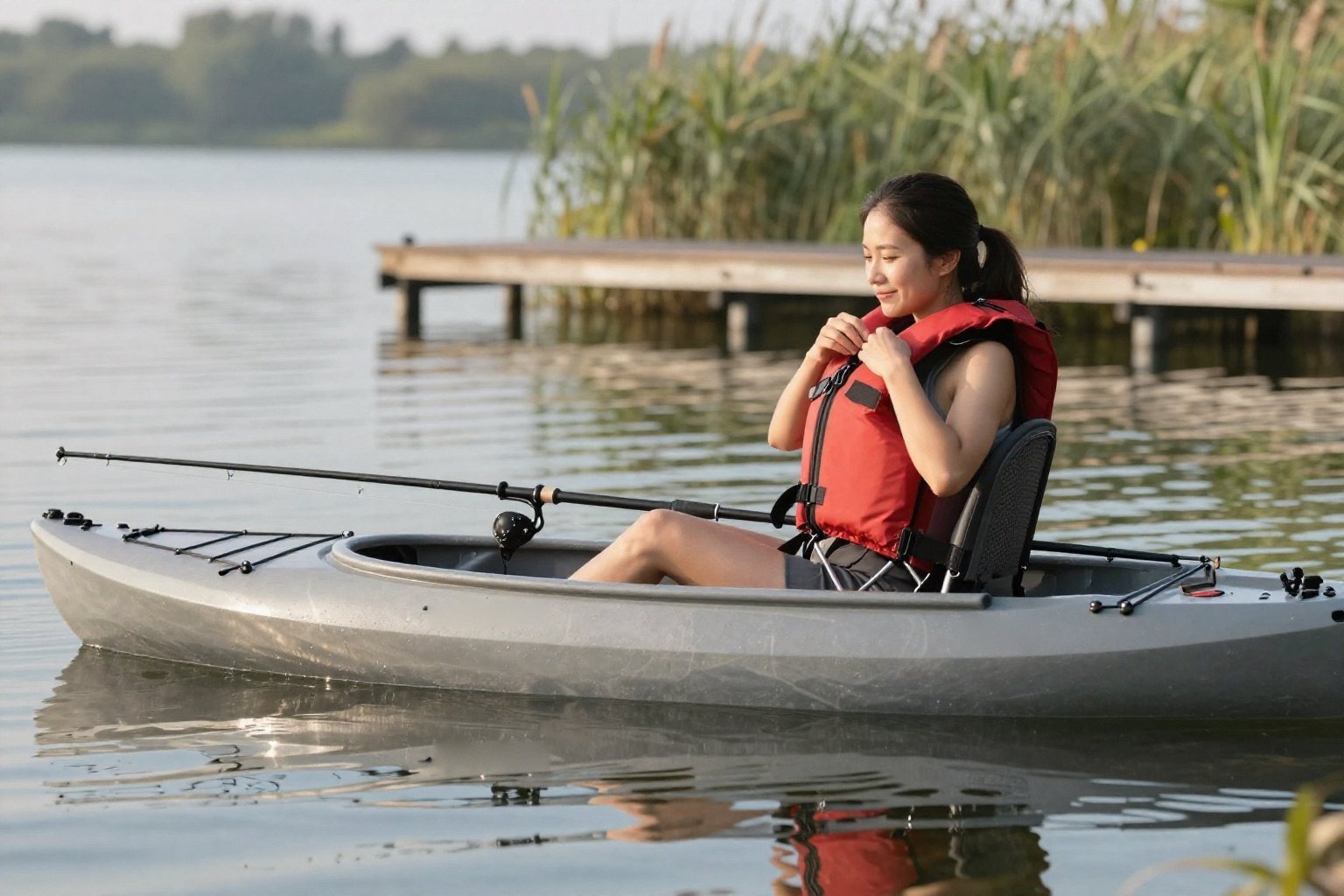
Rod holders, tracks and storage come next. Then budget for the things the kayak does not include: a paddle sized for a wide hull (240 to 250 cm on REI's chart for boats over 32 in), a life jacket for each person, which U.S. federal rules require on board, a whistle and a light if you will be out after sunset.
Working to a budget? Our cheap fishing kayaks ranking keeps only low-priced kayaks, led by the Intex Excursion Pro K2.
Five common first-kayak mistakes
- Choosing by the photo and the colour, then finding the capacity leaves no room for the cooler.
- Forgetting hull weight: a 100 lb pedal kayak you cannot lift alone stays in the garage.
- Buying a long kayak for a short car or a small storage spot. Measure first.
- Using the short paddle from the box on a wide hull. Size it to the beam and your height.
- Adding a motor without checking the rules: in the U.S. it makes the kayak a vessel that must be registered in its state.
Our rated picks by angler
- First fishing kayak, all-round: Lifetime Muskie Angler (9.3/10), paddle included.
- Light and easy to carry: Pelican Sentinel 100X Angler (8/10), 44 lb, 4 rod holders.
- Hands-free on a budget of space: Reel Yaks Raptor Modular, Fin Drive (9.1/10), modular fin-drive pedal kayak, 380 lb.
- For two or for travel: Intex Excursion Pro K2 (9.4/10), inflatable, 400 lb.
The complete list is our best fishing kayaks ranking.
Our rated picks
The three best-rated models of our best fishing kayaks ranking, from buyer reviews and the listed specs.


Product images: Amazon listings
Frequently asked questions
What size fishing kayak do I need?
Start from capacity: your weight plus gear, with a margin, under the usable or maximum figure. For length, 10 to 12 ft suits most anglers; shorter for small rivers, longer for big water.
What is the best type of kayak for fishing?
For most people a sit-on-top: easy to get on and off, room to move and often stable enough to stand. Sit-insides suit cold water; inflatables suit small storage and travel.
Should a beginner get a pedal or paddle fishing kayak?
Most beginners do well with a paddle kayak: lighter, cheaper and nothing to maintain. Move to pedals when you fish open water or wind often and want your hands free.
What else do I need besides the kayak?
A paddle that fits a wide hull, a life jacket for each person, a whistle, a light for low light, and a way to carry the kayak to the water, such as a cart.
Sources
- REI Expert Advice — How to Choose a Fishing Kayak (consulted Nov 2026)
- REI Expert Advice — How to Choose a Kayak (consulted Nov 2026)
- REI Expert Advice — How to Choose Kayak Paddles (consulted Nov 2026)
- U.S. Coast Guard — A Boater's Guide to the Federal Requirements for Recreational Boats (PDF) (consulted Nov 2026)