Fishing Kayak Weight Capacity: Weight Limit vs Usable Load
What a fishing kayak weight limit covers, why some makers print a lower usable capacity, and how to add up your real load before you buy.

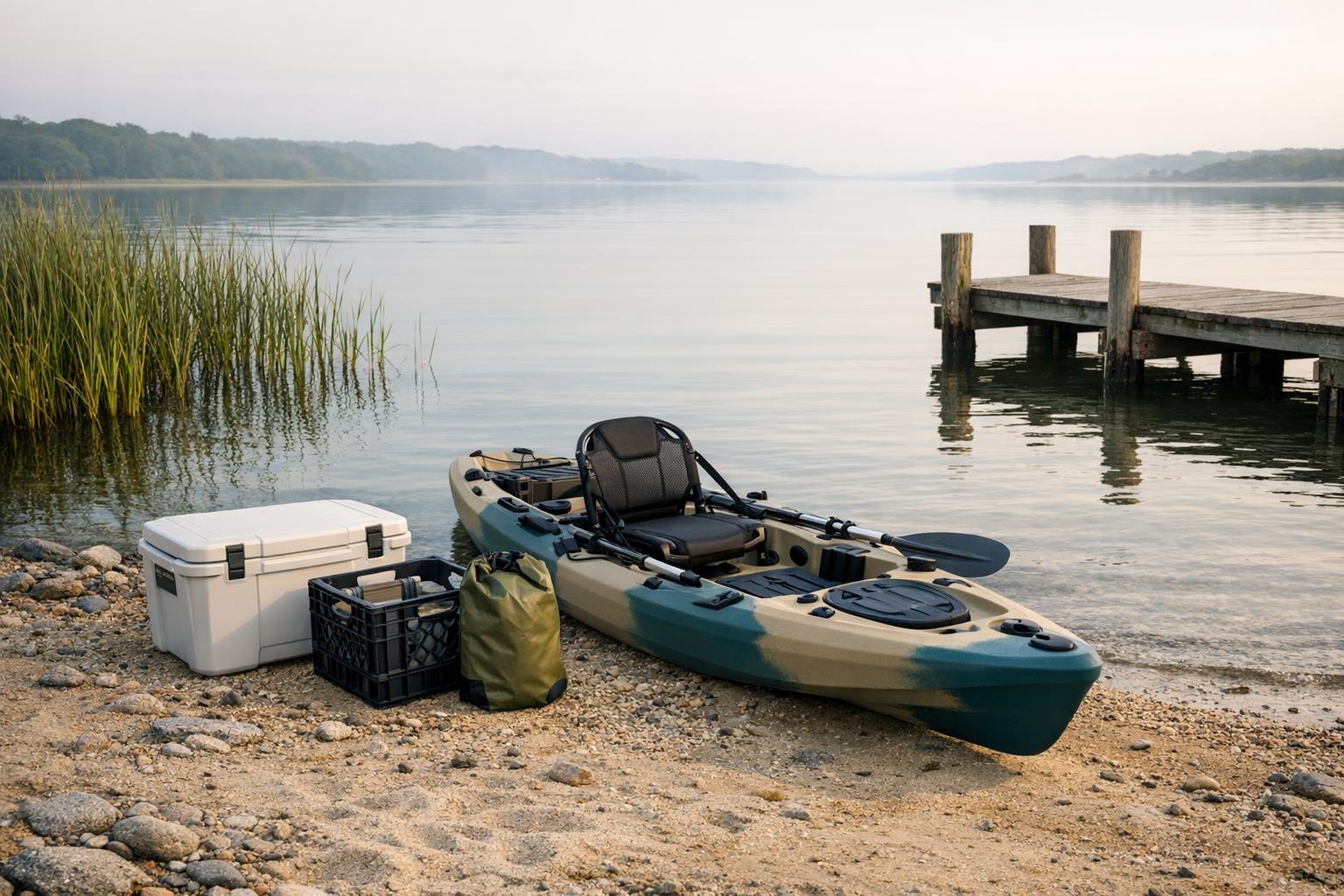
A fishing kayak's weight capacity is the total load the hull is rated to carry: you, your tackle, the cooler, the anchor, the battery and anything bolted on. Treat it as a ceiling, not a target. When the maker also prints a lower usable capacity, plan with that figure, and keep a margin on top of it.
Affiliate disclosureAs an Amazon Associate we earn from qualifying purchases made through links on this page. Commissions never change our ratings.
Maximum capacity vs usable capacity
Most listings print one number. A few print two, and the gap is bigger than people expect. Old Town gives its Sportsman PDL 106 a 450 lb maximum and a 343 lb usable capacity for people and gear. Its motorized Sportsman 106 states 525 lb maximum and 329 lb usable. So on those two listings the usable figure is only 63 to 76 percent of the headline number.
Why does it matter? REI's kayak guide puts it plainly: an overloaded boat sits too low in the water and paddles less efficiently. Lower freeboard also means more water over the deck on a sit-on-top. The maximum is the point where the hull still floats with that weight; the usable number is where it still behaves like a fishing kayak.
| Kayak | Maximum | Usable | Usable share |
|---|---|---|---|
| Sportsman PDL 106 | 450 lb | 343 lb | 76 % |
| Sportsman 106 with Minn Kota motor | 525 lb | 329 lb | 63 % |
Add up everything that goes aboard
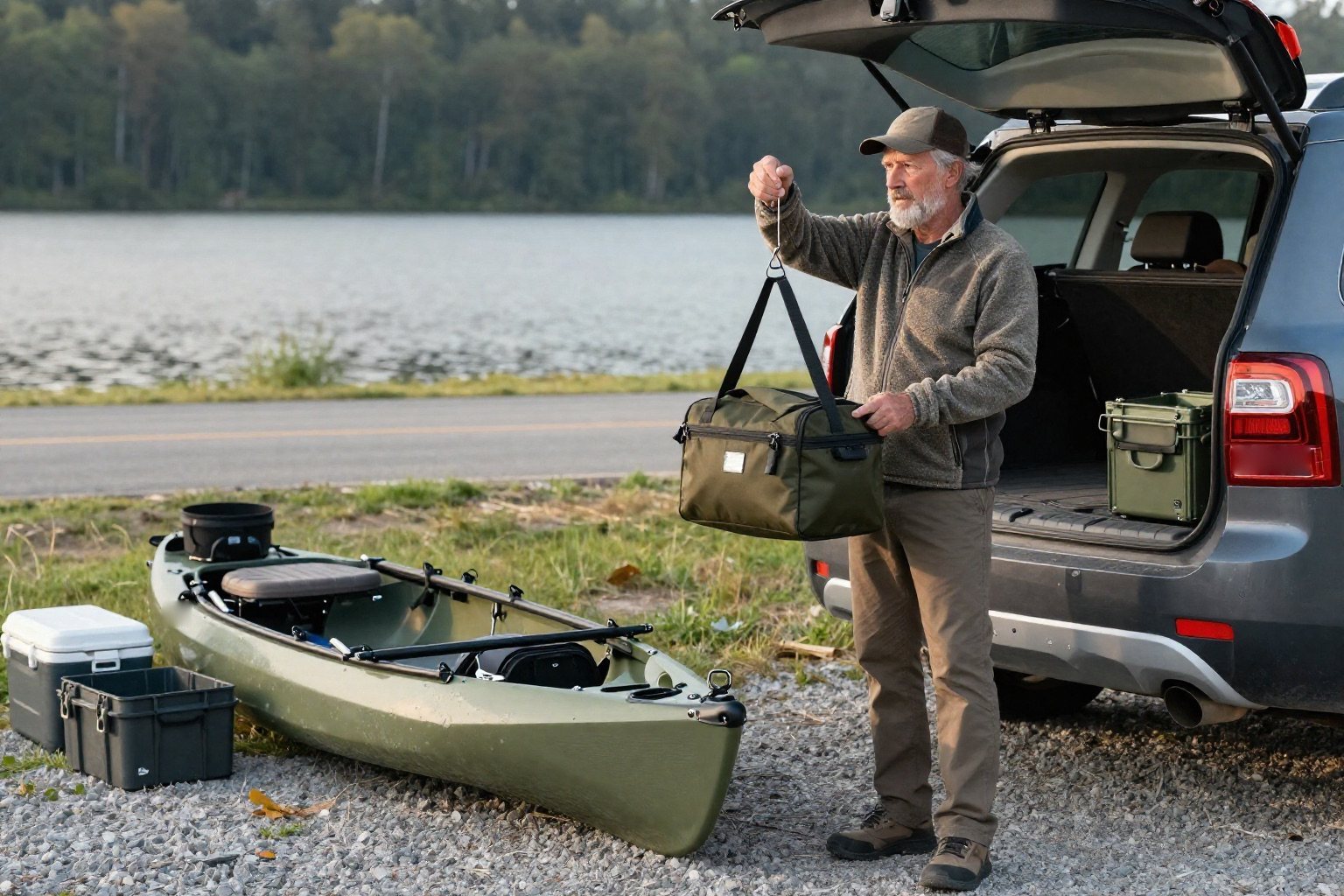
Write the load down before you look at hulls. A typical solo day looks like this: you, a rod or three with a tackle bag, a crate, a cooler with ice and lunch, an anchor, a life jacket, water, and a fish finder with its battery. On a motorized or pedal kayak the drive rides on the same number.
| Item | Typical weight |
|---|---|
| Angler | 200 lb |
| Rods, reels, tackle bag | 15 lb |
| Crate with gear | 15 lb |
| Cooler with ice, food, water | 25 lb |
| Anchor and line | 5 lb |
| Life jacket, paddle, small items | 10 lb |
| Total | 270 lb |
Our kayak capacity planner does the sum for you: enter the stated capacity, your weight and your gear, and it shows what is left. If the result is close to zero, you are shopping in the wrong size class.
How much margin should you keep?
The simplest guide is the maker's own numbers. If a usable figure exists, stay at or under it. If the listing only gives a maximum, the Old Town pair above suggests that a usable load of roughly two thirds to three quarters of it is a sensible planning figure. For the 270 lb example, that points to kayaks rated around 360 to 400 lb or more.
The Coast Guard's guide to federal requirements tells boaters never to exceed the load on the capacity plate, and to ask the manufacturer when there is no plate. On a kayak that usually means the listing or the owner's manual. Two people in one hull? The tandem kayak weight limit guide puts the stated capacities of our two-person kayaks side by side.
How much does a fishing kayak weigh?
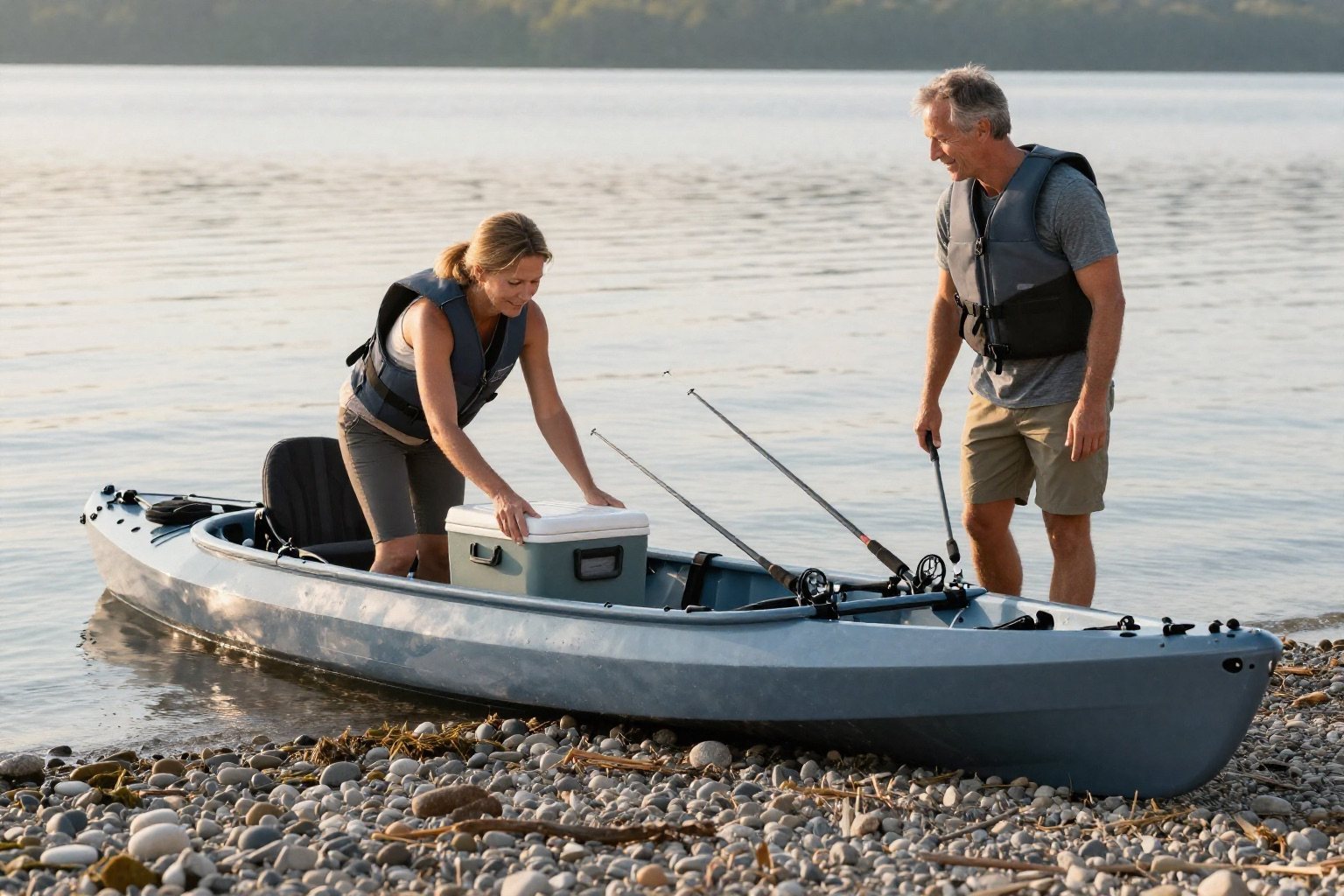
Hull weight is a different number from capacity, and it is the one your back feels. Here is what the listings in our catalog state, lightest first:
| Kayak | Type | Length | Weight |
|---|---|---|---|
| Retrospec Coaster Inflatable | Inflatable | n/a | 23 lb |
| Pelican Sentinel 100X Angler | Sit-on-top | 9 ft 6 in | 44 lb |
| Old Town Loon 120, Lava | Sit-inside | 12 ft | 54 lb |
| Pelican Catch Mode 110 | Sit-on-top | 10 ft 8 in | 63 lb |
| Perception Pescador Pro 12, Moss Camo | Sit-on-top | 12 ft | 64 lb |
| BKC RA220 Angler, 11.5 ft | Sit-on-top | 11 ft 8 in | 78 lb |
| Old Town Sportsman PDL 106, Steel Camo | Pedal | 10 ft 6 in | 107 lb |
| Old Town Sportsman 106 Motor, Ember Camo | Motorized | 10 ft 6 in | 121 lb |
Rule of thumb from these figures: a 10 to 12 ft paddle sit-on-top weighs 45 to 80 lb, pedal and motor models pass 100 lb. REI notes that a lighter boat also leaves more of the capacity for gear, because the hull itself is not part of it.
Which of our rated kayaks fits which load
- Light angler, short trips: the Pelican Sentinel 100X Angler (8/10) is the one to carry alone at 44 lb, with 4 rod holders according to the listing.
- Heavier load or bigger angler: the Perception Outlaw 11.5 (7.9/10) states 425 lb, the BKC RA220 Angler, 11.5 ft 550 lb with a 34.25 in beam.
- Two people or a lot of gear: the BKC Brooklyn 12.5 Tandem, Camo states 600 lb, the Intex Excursion Pro K2 400 lb solo or tandem.
- Pedal drive with a published usable figure: the Old Town Sportsman PDL 106, Steel Camo (343 lb usable).
The full field, scored on buyer reviews and the stated specs, is in our best fishing kayaks ranking.
Our rated picks
The three best-rated models of our best fishing kayaks ranking, from buyer reviews and the listed specs.


Product images: Amazon listings
Frequently asked questions
What is a good weight capacity for a fishing kayak?
Add your body weight to everything you carry, then pick a kayak whose usable capacity covers it. If only a maximum is printed, plan to load about two thirds to three quarters of it. For a 200 lb angler with normal gear, that usually means 350 to 400 lb or more.
What happens if you go over a kayak's weight limit?
The hull rides lower, takes more water over the deck and becomes slower and harder to control. REI's kayak guide notes that an overloaded boat sits too low and paddles less efficiently. Well over the limit, stability and safety suffer.
Does the weight limit include the kayak itself?
No. The capacity is what the hull carries on top of its own weight: paddler, gear, drive and battery. The hull weight is a separate figure on the listing.
How much does a fishing kayak weigh?
In our catalog, paddle sit-on-tops of 10 to 12 ft weigh 44 to 78 lb according to their listings, a pedal model 107 lb and a motorized one 121 lb. Inflatables can be far lighter, around 23 lb.
Sources
- REI Expert Advice — How to Choose a Kayak (consulted Nov 2026)
- REI Expert Advice — How to Choose a Fishing Kayak (consulted Nov 2026)
- U.S. Coast Guard — A Boater's Guide to the Federal Requirements for Recreational Boats (PDF) (consulted Nov 2026)