Sit-on-Top vs Sit-Inside Fishing Kayaks: Which to Choose
Sit-on-top or sit-inside kayak for fishing? Stability, getting in and out, cold water, storage and weight compared, with the models we rate.

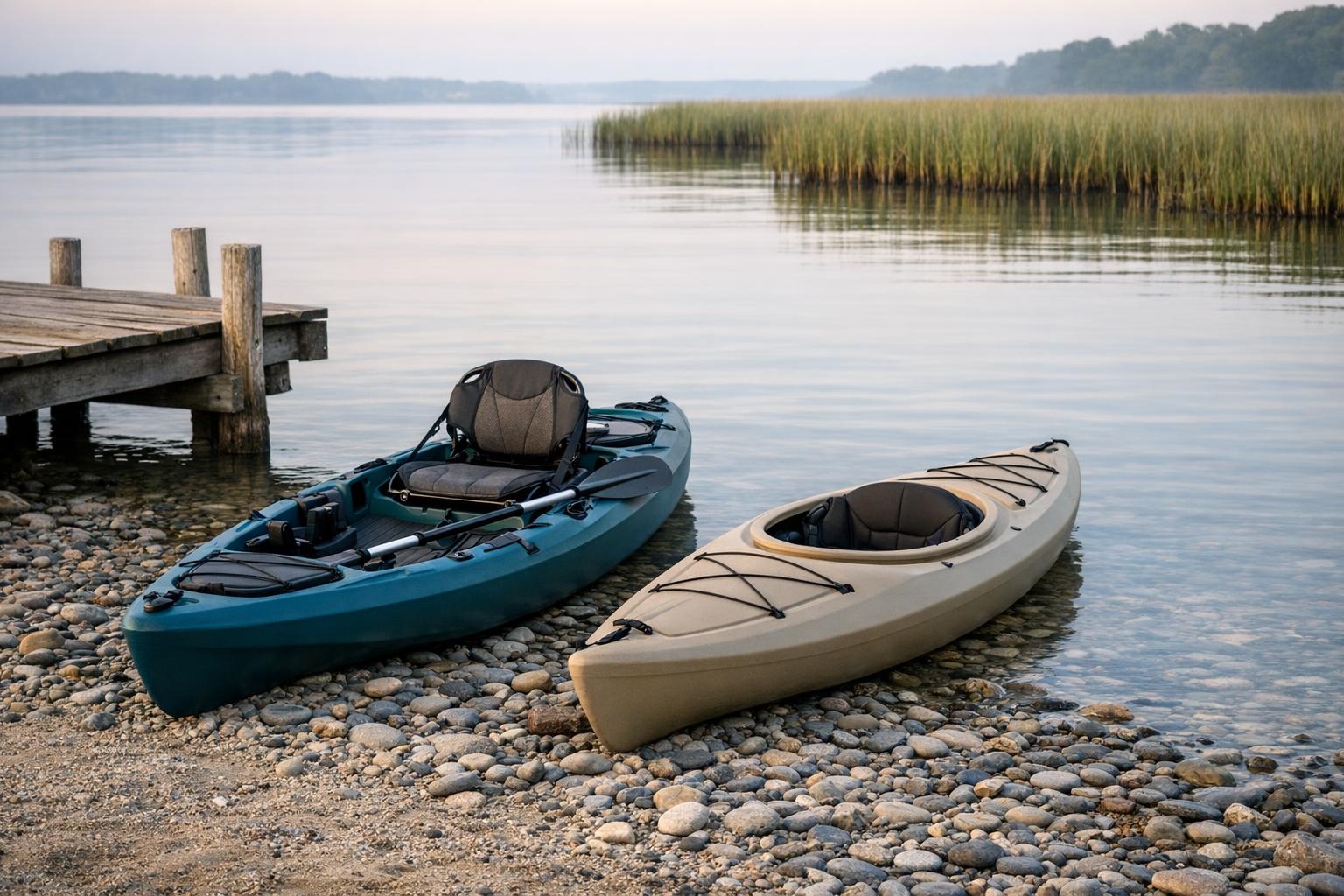
For most anglers a sit-on-top is the easier fishing kayak: you climb on and off, you can turn around to reach gear, and many models let you stand to cast. A sit-inside kayak keeps you drier and warmer, which matters in cold water and wind, and it is usually lighter for the same length. Pick by water temperature and how much you move around while fishing.
Affiliate disclosureAs an Amazon Associate we earn from qualifying purchases made through links on this page. Commissions never change our ratings.
The short answer, side by side
| Sit-on-top | Sit-inside | |
|---|---|---|
| Getting in and out | Easiest; you sit on the deck | You slide into a cockpit |
| Standing to cast | Many models allow it | Rarely |
| Staying dry | You will get wet; scupper holes drain the deck | Drier; a spray skirt can close the cockpit |
| Cold water | Needs proper clothing | Better suited |
| Weight | Typically heavier | Typically lighter |
| Reaching gear | Turn around to the tank well | Work deck or hatch in front of you |
That table follows REI's fishing kayak guide, which says sit-on-tops are more popular for fishing because they are easy to get on and off, generally more stable and often standable, while sit-ins are the better pick when you want to stay out of the water and paddle in colder conditions.
Why most fishing kayaks are sit-on-tops
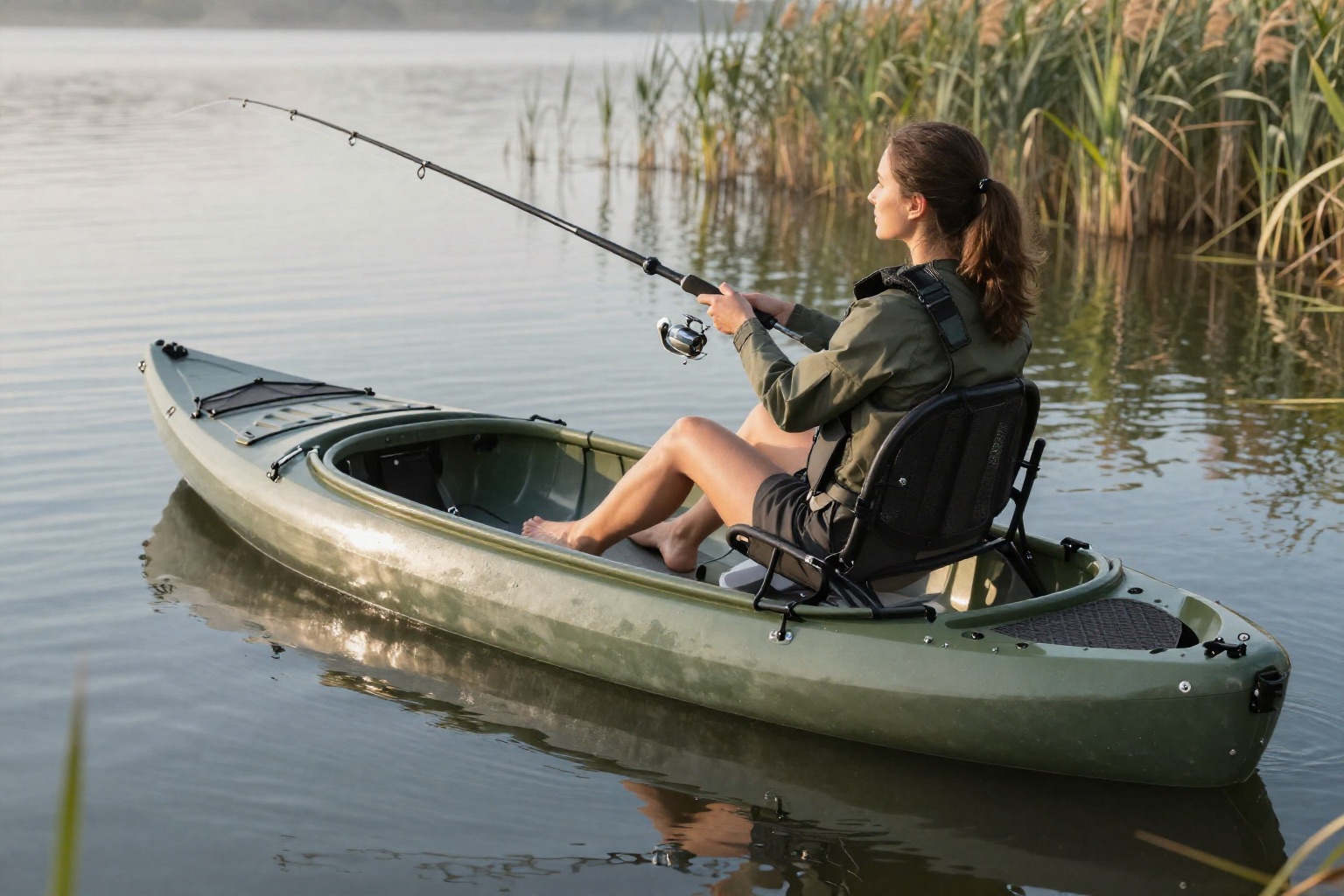
Fishing means moving: twisting to the crate, leaning to land a fish, standing to sight-cast in the shallows. An open deck makes all of that easier. REI also notes that you can dangle your legs over the side and turn your body to reach rear storage, which you cannot do inside a cockpit.
The trade-off is weight. Sit-on-tops are typically heavier than comparable sit-ins, REI notes. The Pelican Catch Mode 110 states 63 lb at 10 ft 8 in; the sit-inside Old Town Loon 120, Lava states 54 lb at 12 ft.
When a sit-inside is the better fishing kayak
Cold water changes the answer. The National Center for Cold Water Safety warns that, without a wetsuit or drysuit, most people get maximum-intensity cold shock in water of 50 to 60 °F, and the Coast Guard Auxiliary notes cold-water problems can start in water as warm as 70 °F. On a sit-on-top you sit in the splash all day. A sit-inside keeps your legs dry and out of the wind, so spring and autumn trips stay comfortable for longer.
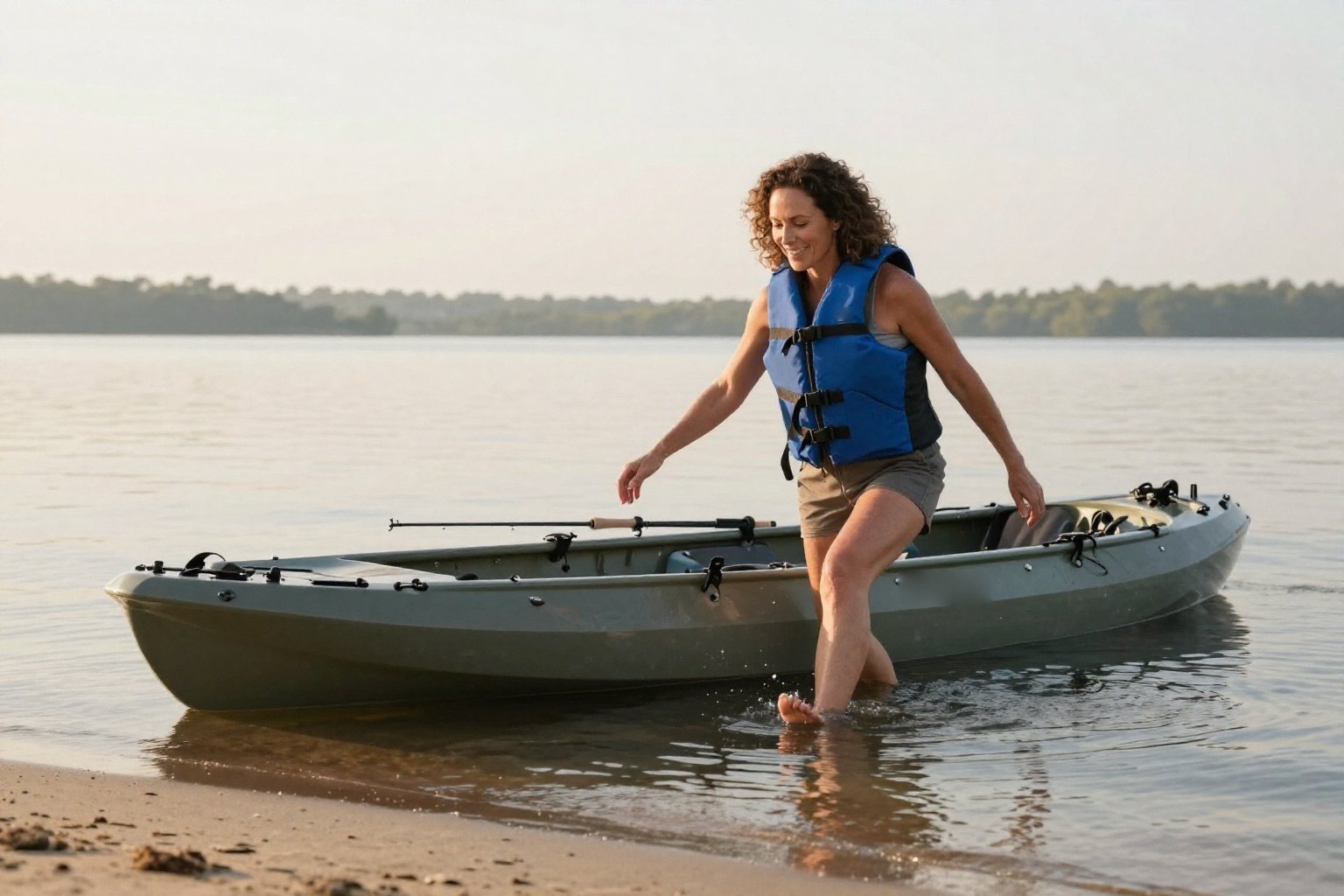
The catch: a capsize in a sit-inside means a wet exit from the cockpit, as REI puts it, and a boat to empty. Practise it close to shore, and always dress for the water temperature rather than the air.
What the listings tell you, and what they don't
The hull type is usually in the title. What you cannot read there is how stable a hull feels under you, so look for numbers instead. The BKC RA220 Angler, 11.5 ft states a 34.25 in beam and 550 lb capacity, the Perception Outlaw 11.5 425 lb at 11 ft 6 in. On the sit-inside side, the Old Town Loon 120, Lava gives 375 lb and the Old Town Loon 106 Angler 325 lb, both with the paddle sold separately.
Width is the closest thing to a stability figure: REI says wider hulls give more initial stability and narrower ones go faster. More on reading the numbers in fishing kayak length and width.
Which of our rated kayaks fits which angler
- Stand-and-cast on calm water: Lifetime Muskie Angler (9.3/10), a 10 ft sit-on-top with a flat bottom and three rod holders according to the listing.
- Lots of gear, bigger frame: Perception Outlaw 11.5 (7.9/10), 425 lb and a fold-away frame seat.
- Cooler weather, long paddles: Old Town Loon 106 Angler (7.2/10), a sit-inside angler with flush-mount rod holders and an anchor system per the listing.
- Light and easy to carry: Pelican Sentinel 100X Angler (8/10), 44 lb.
All of them sit in our best fishing kayaks ranking, scored on buyer reviews and the stated specs.
Our rated picks
The three best-rated models of our best fishing kayaks ranking, from buyer reviews and the listed specs.


Product images: Amazon listings
Frequently asked questions
Is a sit-inside kayak good for fishing?
Yes, especially in cold water or wind, because you stay drier and warmer. You give up some room to move and stand, and reaching gear behind you is harder than on a sit-on-top.
Are sit-on-top kayaks more stable than sit-inside?
Generally, yes, for fishing use. REI describes sit-on-tops as generally more stable and many allow standing. Width matters more than the label: compare the stated beam.
Can you stand in a sit-inside kayak?
Rarely. Standing is a sit-on-top feature, and even there it depends on the model. Only stand when the listing says the hull is made for it and the water is calm.
Which is better for beginners?
A sit-on-top is easier for most beginners: you can climb back on after a fall and there is no cockpit to fill with water. Choose a sit-inside if you mostly paddle in cool weather.
Sources
- REI Expert Advice — How to Choose a Fishing Kayak (consulted Nov 2026)
- REI Expert Advice — How to Choose a Kayak (consulted Nov 2026)
- National Center for Cold Water Safety — Always Dress for the Water Temperature (consulted Nov 2026)
- U.S. Coast Guard Auxiliary — A Paddler's Guide to Safety (PDF) (consulted Nov 2026)